The Hidden Cost of Manual Follow-Up for Service Businesses
Key Takeaways
Manual follow-up often results in delayed responses and missed opportunities.
Better systems create more consistent customer experiences.
Automation supports your team by handling repetitive tasks, not replacing people.
A clear customer journey helps identify where leads are being lost.
Small improvements to your follow-up process can lead to long-term business growth.
Every Missed Follow-Up Has a Cost
A potential customer submits an inquiry through your website.
You plan to reply after finishing a client meeting.
The meeting runs longer than expected. More emails arrive. A few phone calls come in. By the end of the day, you completely forget about the inquiry.
The next morning, the customer has already booked with someone else.
This happens more often than many business owners realize.
Most service businesses don't lose opportunities because they lack leads. They lose them because they don't have a consistent follow-up system.
Why Manual Follow-Up Breaks Down
Manual follow-up works when your business is small and inquiries are manageable.
As your business grows, so do the number of conversations, appointments, and customer requests that need your attention. Without a clear process, keeping track of every lead becomes increasingly difficult.
Some common situations include:
Website inquiries waiting for a response.
Facebook or Instagram messages getting buried in notifications.
Quote requests that never receive a follow-up.
Appointments booked without confirmation or reminders.
Previous customers who are never contacted again.
None of these happen because business owners don't care. They happen because people are trying to manage a growing business using manual processes.
The Hidden Cost of Manual Follow-Up
The impact goes beyond delayed replies.
Lost Revenue
Customers often contact multiple businesses before making a decision. If your response arrives hours or days later, they may have already chosen someone else.
Inconsistent Customer Experience
Some customers receive immediate responses while others wait much longer. That inconsistency can reduce confidence in your business before you've even had a conversation.
More Administrative Work
Following up manually means constantly switching between emails, messages, calendars, and spreadsheets.
Those small tasks add up and reduce the time available for serving clients, improving your services, or growing your business.
Limited Visibility
Without a structured system, it's difficult to answer questions like:
Which leads still need a response?
How many follow-up attempts have been made?
Where do prospects stop moving forward?
Which marketing channels generate paying customers?
When you can't answer these questions, improving your sales process becomes much harder.
Better Follow-Up Starts with Better Systems
Many businesses assume they need to send more messages.
The real solution is creating a process that ensures every lead receives the right communication at the right time.
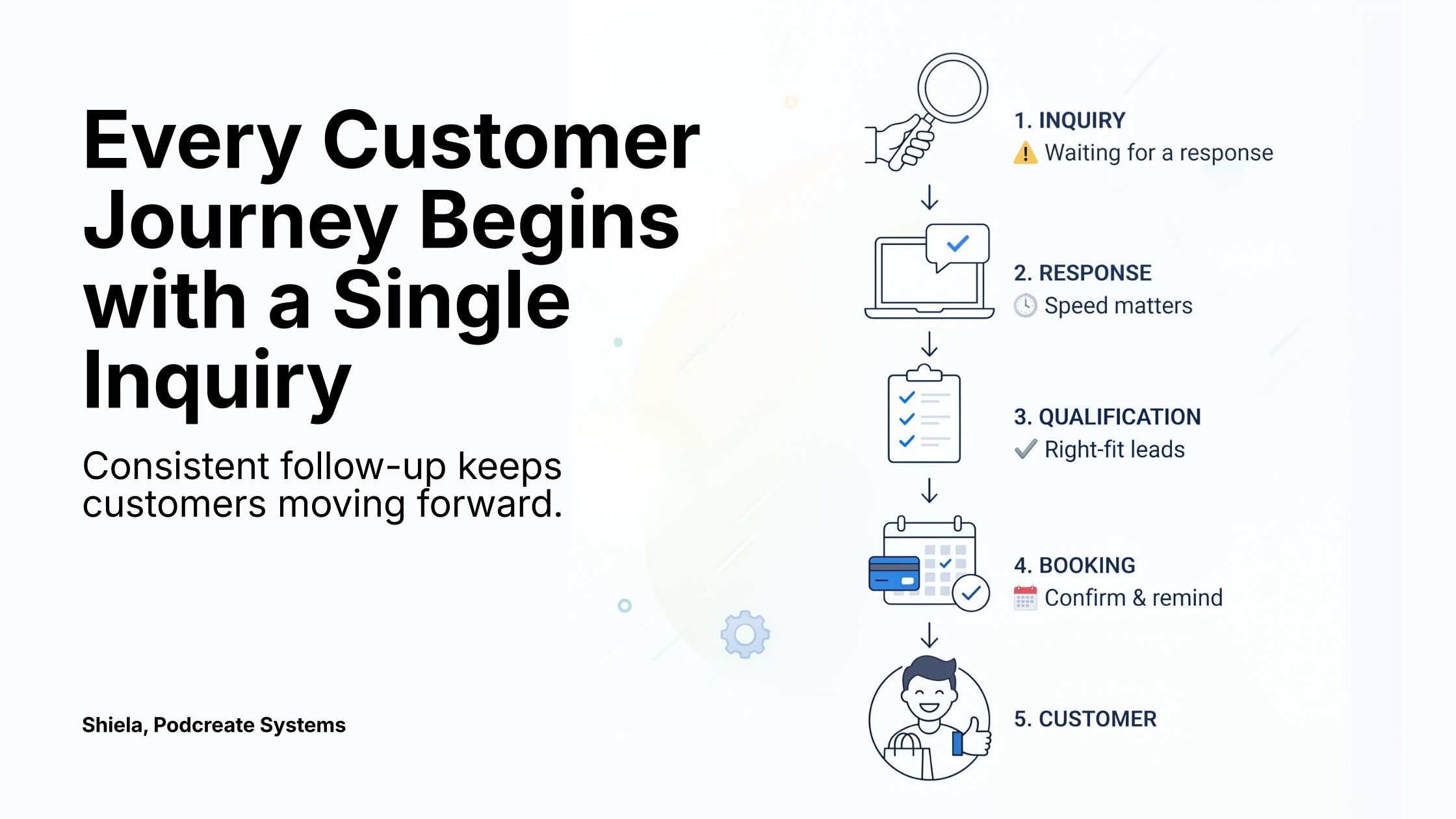
A simple customer journey might look like this:
A new inquiry is received.
An acknowledgement is sent immediately.
Basic information is collected.
The lead is assigned to the right person.
An appointment is booked and confirmed.
Reminder messages are sent automatically.
Follow-up continues after the appointment.
A structured process reduces missed opportunities and creates a more consistent experience for every customer.
Where Automation Fits
Automation is not about replacing people.
It's about removing repetitive tasks that consume valuable time.
For example, confirmations, reminders, and routine follow-up messages can happen automatically while your team focuses on conversations that require a personal touch.
The goal is simple. Every customer receives timely communication, even when your business is busy.
Start With the Customer Journey
Before introducing new tools or AI, it's important to understand how your business currently operates.
At PodCreate Systems, we use the CALMA Framework™ to map the customer journey, identify where leads are being lost, and design systems that improve consistency across every stage of the customer experience.
Technology works best when it supports a clear process.
Final Thoughts
If your follow-up depends on memory, sticky notes, or finding spare time at the end of the day, your business is relying on a process that becomes harder to manage as you grow.
You don't always need more leads.
Sometimes you simply need a better system for managing the ones you already have.
Small improvements to your follow-up process can reduce missed opportunities, create a better customer experience, and give your team more time to focus on meaningful work.
The businesses that grow consistently are rarely the ones doing the most work. They're the ones with systems that ensure no opportunity slips through the cracks.
